The Calendar Gap: Why Your Bills and Your Payday Keep Missing Each Other
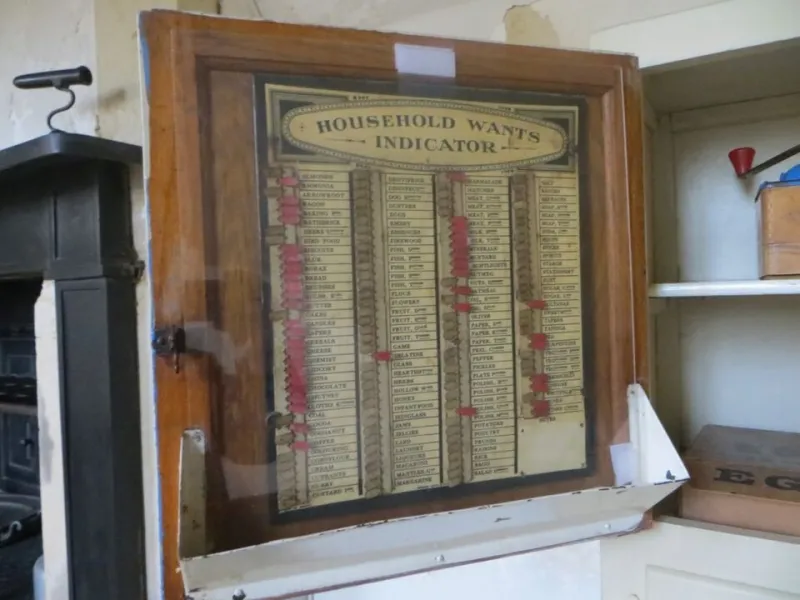
Photo: Bill Nicholls , CC BY-SA 2.0, via Wikimedia Commons
There’s a particular kind of November stress that has nothing to do with Christmas shopping. It’s the week before payday, when the fridge is half-empty, the car needs fuel, and three direct debits have somehow clustered into the same 48-hour window. Nothing dramatic has happened. No emergency. Just a calendar gap.
Most of us set up bills on the day we signed up: the day we moved in, the day the broadband went live, the day the insurance quote was accepted. Payday, meanwhile, arrives on its own schedule. If those two dates don’t line up, the month can feel like a countdown to the red even when your annual income is perfectly reasonable.
The good news is that this is one of the cheapest money problems to fix. It usually costs nothing but a bit of admin — and a little patience with hold music.
The gap isn’t a spending problem
It’s tempting to treat a pre-payday squeeze as proof that you need to cut back. Sometimes you do. But before you start cancelling subscriptions and convincing yourself that a flask of soup counts as a night out, check the timing. A household can be fine on average and still miserable in week four because too much money leaves the account before the wages arrive.
This is a cash-flow issue, not necessarily a budgeting failure. The fix is to line up the exits with the entrance.
Start with payday, not the bill
Get a piece of paper, a notes app, or a spreadsheet — whatever you’ll actually use. Write down the date you get paid. If your payday moves around, write down the earliest realistic date. Shift workers, freelancers and anyone paid four-weekly need to be honest here. A bill set for the 28th is not safe if your salary sometimes lands on the 30th.
Next, list every regular outgoing: rent or mortgage, council tax, energy, water, broadband, mobile, insurance, childcare, loan repayments, subscriptions, and anything else that leaves by Direct Debit or standing order. Add the amount and the current date. Don’t aim for perfection. A rough list is enough to spot the pile-up.
Then mark the problem zone: the days before payday when more than one significant bill lands. That’s your calendar gap.
The 30-minute audit
You don’t need a financial adviser for this. You need half an hour and a bit of nerve.
First, check your bank’s upcoming payments screen. Most banking apps now show pending Direct Debits and standing orders, which is far more reliable than memory. Note anything you’d forgotten about.
Second, decide which bills are genuinely movable. A standing order is the easy one: you control the date, so you can usually change it yourself in your banking app. Direct Debits are different. The organisation collects the money, so you have to ask them to change the date. That’s not a reason to avoid asking, but it helps to know who holds the lever.
Third, group your bills into two rough buckets: ‘must leave after payday’ and ‘can leave later in the month’. Rent or mortgage usually stays put. Council tax instalments may be movable. Energy, broadband, mobile and insurance providers often have some flexibility, though not always on the date you want.
Fourth, contact the providers in order of pain. If a £90 energy payment and a £45 mobile bill are landing three days before payday, those are your first calls. Ask a simple question: ‘Can you change my Direct Debit date to the 3rd of the month?’ Have your account number ready and be clear about the date you want.
Who will move a date — and who won’t
There’s no universal rule, which is annoying but true. Many energy suppliers, broadband providers and mobile networks will move a Direct Debit date, especially if you ask for a date later in the month. Some will only offer certain billing dates. Insurers can be flexible, but changing a date mid-policy may affect the instalment schedule. Council tax departments vary by council: some allow a different instalment date, some don’t, and some will only change it at the start of a new council tax year.
Loan repayments are often less flexible because the lender’s system is tied to the original agreement. That doesn’t mean you shouldn’t ask. It means you should ask before you assume.
One practical tip: don’t cancel a Direct Debit simply to force a date change. Cancelling can trigger missed-payment fees, damage your credit file, or create a gap in cover. Ask for a change first. If the provider says no, ask what alternatives they can offer. Sometimes the answer is a different collection date; sometimes it’s a different payment method; sometimes it’s genuinely no.
Build the £50 shock absorber
Even after you’ve rearranged the calendar, life happens. A bill lands early. A salary lands late. The boiler makes a noise that sounds expensive. This is where a small buffer earns its keep.
A £50 buffer isn’t an emergency fund and it isn’t savings for a rainy day. It’s a working balance: money that stays in your current account so a timing wobble doesn’t turn into an overdraft fee or a panicked transfer from somewhere else. If £50 feels impossible, aim for £20. The point is to create a small gap between ‘money in’ and ‘money out’ so every month doesn’t have to be perfect.
You can build it in £5 or £10 steps, or by moving a tiny amount the day after payday. Keep it separate in your mind, even if it sits in the same account. The rule is simple: the buffer is not for spending. It’s for absorbing the calendar.
Make the calendar visible
Once you’ve changed what you can, put the new dates somewhere you’ll see them. A shared calendar, a note on the fridge, a reminder in your banking app. If you have a partner, make sure you both know which bills leave when. Most household money arguments aren’t about spending; they’re about surprises.
Then check again in a month. Did the changes actually take effect? Did a provider move the date but not the amount? Did a new subscription sneak in? A five-minute review is enough.
The aim isn’t a perfectly optimised financial machine. It’s a month where payday arrives before the squeeze, not after it. That’s a free fix worth making before the January bills land.